A five-person sales team can share one outreach team. A sales manager can create a separate team with each rep. Each rep can also create a team and invite nobody.
Doreach supports all three setups. Five connected LinkedIn accounts cost the same in each case. Teams and team members do not add a fee, so the company can choose who works together without buying extra user licences for managers, sales operations staff or clients.
Start with who should share the work
Adding someone to a Doreach team gives them access to the work inside that team. They can see its connected LinkedIn accounts, campaigns, prospects, conversations and analytics.
One shared team works well when several people use the same accounts. Create separate teams for two reps who should not see each other’s pipelines.
Roles control what a member can change. Owners and Admins manage people, settings, templates and billing. A Member can work on campaigns and conversations. No role hides one rep’s prospects from another person in the team. The roles and permissions reference lists each role.
The setup decision comes down to three questions:
- Should the reps share outreach accounts and conversations?
- Should a manager see each rep’s work?
- Should each rep control their team and billing?
One shared team keeps everyone on the same work
Create one team when your sales reps should share accounts, prospects and replies.
A five-person team could connect five LinkedIn accounts and add all five reps, the sales manager and a sales operations specialist. Every member can see the work from all five accounts. The company pays for five LinkedIn accounts, while the seven people in the team add no user fee.
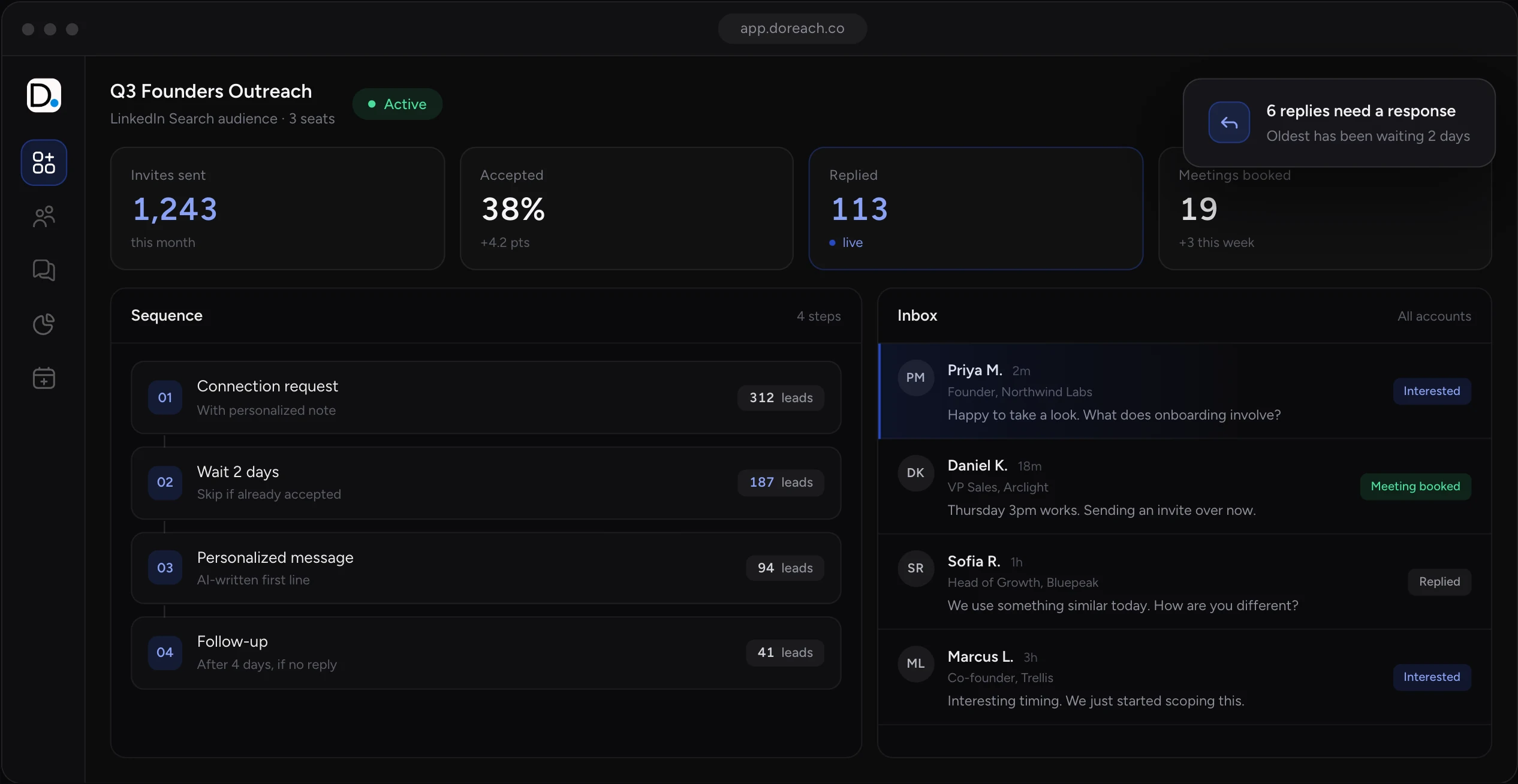
The shared inbox puts conversations from all connected accounts in one place. Members can assign conversations, leave internal notes and see who owns each prospect. Someone can cover a reply when a rep is away without asking for that rep’s login.
A shared team works well when the group uses one pipeline or hands prospects between people. The manager also gets one dashboard and one set of analytics for the whole team.
The tradeoff is visibility. Any active member can open another member’s prospects and conversations. Assignment helps the group organise the work, but it does not make the work private.
Separate teams give each rep privacy and manager access
Create one team per rep when each rep should have their own account, campaigns and pipeline.
The sales manager can create a team for each rep, add that rep, and join the team as Owner or Admin. Rep A cannot see Rep B’s team because Rep A was never added to it. The manager can switch between both teams.
Separate rep teams give the manager access without opening every pipeline to the whole sales floor. They also work for new hires and contractors who should only see their assigned accounts.
The manager does not cost more when added to several teams. Doreach charges for the connected LinkedIn account in each team, not for the manager who checks it.
Separate teams do require more work from the manager. Doreach does not combine their inboxes, dashboards or analytics. The manager opens each team from the team switcher and combines any company-wide reporting outside Doreach.
Each rep can create a team and work alone
A company does not have to create and manage every team from one owner account. Each sales rep, outreach specialist or GTM expert can sign up, create their own team and connect their own LinkedIn account.
The rep invites nobody, so nobody else can see their campaigns, prospects or conversations. They control the team and its subscription. If the company wants a manager to review the work later, the rep can invite the manager and choose a role.
A rep-owned team suits someone who controls their outbound process. It also suits an external specialist who should not join the company’s shared team.
The company gives up central access while the rep works alone. A manager cannot check the team until the rep invites them.
Agencies can use one team per client
The same choices apply to agencies. An agency can keep its own outreach in one team, then create a separate team for each client.
Add only the staff who work on that client. Doreach has no read-only role, and every member can change campaigns, so if the client needs visibility, share results with them, for example a CSV export, rather than adding them to the team.
One client cannot see another client’s team unless someone adds them to it. The agency team guide covers invitations and client access.
The account count sets the price
Each LinkedIn account costs $45 a month. The first one comes with the subscription, which also covers email, Instagram and WhatsApp, and each extra LinkedIn account is an add-on. Teams and team members do not add a fee.
| Setup | Connected LinkedIn accounts | Paid LinkedIn accounts | Monthly cost |
|---|---|---|---|
| One shared team with 5 reps | 5 | 5 | $225 |
| 5 rep teams with a manager in each | 5 | 5 | $225 |
| 5 teams owned by 5 individual reps | 5 | 5 | $225 |
The team structure changes who can share the accounts. The number of connected accounts decides how many you pay for.
Separate teams still have separate subscriptions, invoices and renewal dates. Five teams with one connected account each cost the same $225 per month as one team with five accounts, but the company handles five subscriptions.
Doreach also limits how many unpaid teams one person can create. You can create two teams before subscribing. Each team you subscribe to gives you room to create one more. How to structure your teams explains the setup order and team limit.
What we would not do
We would not create a separate team for every rep by default.
A group that shares accounts and covers replies for one another benefits from one inbox and one dashboard. Splitting that group into five teams adds reporting and billing work without giving them a benefit they need.
We would create separate teams when the company can name the access rule. A rep should not see another rep’s pipeline. A contractor should only see one account. A client should only see their own campaigns.
Ask vendors how teams and billing work together
Products use the words team, user, member and seat in different ways. Ask three questions before choosing how to arrange your sales team:
- Can several people work from the same connected LinkedIn accounts?
- Can one manager join several teams without another charge for each team?
- Can I keep one rep’s prospects and conversations hidden from another rep?
A price per user does not answer those questions. A price per connected account does not answer them either. You need the product’s membership, privacy and billing rules together.
Choose the setup your team needs
Use one shared team when people should work from the same accounts and conversations. Create one team per rep when each pipeline should stay private but a manager needs access. Let each rep create their own team when they should own the work alone.
The Doreach team setup guide gives you the steps for each choice. Start by deciding who should share the accounts, then create the first team from the team switcher.