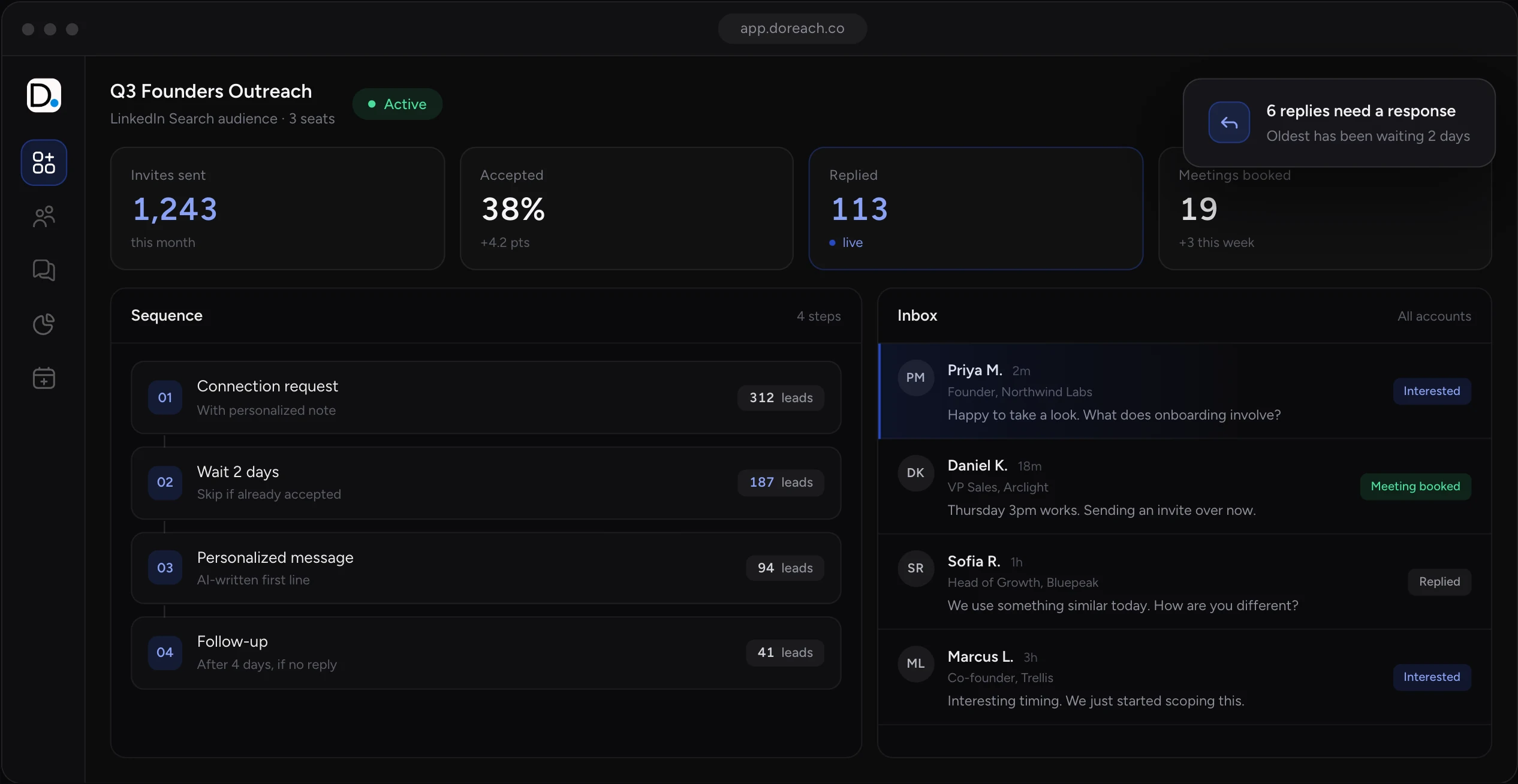
Find the right people with audience building.
Start with people who fit your offer or engage with topics relevant to it. Build your campaign audience from social activity, existing contacts or your own lists.
Three ways to build an audience.
-
Find people who fit.
Build an audience from LinkedIn searches and groups relevant to your offer.
-
Start with shared interests.
Reach people who engage with relevant LinkedIn posts, follow Instagram accounts or comment on Instagram posts.
-
Bring your existing contacts.
Upload a CSV, reuse a saved audience or select contacts from your Instagram and WhatsApp chats.
-
See who each channel can reach.
See which contacts have the details needed for each channel before you launch.
Keep every list clean and reusable.
-
Saved audiences
Save an audience and use it again in your next campaign.
-
CSV import
Bring contacts from any tool with a CSV.
-
Contacts from your chats
Pick people straight from your Instagram and WhatsApp conversations.
-
No double messaging
People already in another running campaign are left out, so nobody hears from you twice at once.
-
Contact exclusions
Blocked and unsubscribed contacts stay out of future campaigns in your workspace.
-
CSV exports
Export prospect records with stages and ownership details for use outside Doreach.
Every source, one subscription.
Every audience source comes with your Doreach subscription, on every channel. Need more sending accounts to reach them? Add them on any channel.
See pricingQuestions about audience building.
Where can I find people with Doreach?
LinkedIn searches, LinkedIn post engagers and group members, Instagram account followers and post commenters, your Instagram and WhatsApp chats, a CSV or a saved audience.
Can I import my own list?
Yes. Upload a CSV and use it as the audience for any campaign.
Can I reuse an audience?
Yes. Save an audience and use it again in your next campaign.
Will someone hear from two campaigns at once?
No. People already in another running campaign are left out, and blocked or unsubscribed contacts stay out of future campaigns.
Can I see who each channel can reach?
Yes. Before you launch, Doreach shows which contacts have the details needed for each channel.
Goes well with
In the help center: Campaign types and audience sources · Import prospects from a CSV
Your next conversation starts with Doreach.
Bring your accounts together and launch your first campaign.
7-day free trial · No credit card required