Most prospecting advice starts with tools. It should start with a sentence you have to be able to finish: “I am contacting these people because ______.”
If you cannot finish it, no sequence, tool or opener will rescue the campaign. If you can, most of the hard work is already done.
Three decisions, in order
Who. A specific group with something in common beyond a job title.
Why now. A trigger, a shared context, a recent event. This is what makes the message land this week rather than any week.
What you open with. The part everyone starts with, and the least important of the three.
Building the list
A tight list of two hundred people beats a loose list of two thousand, on reply rate and on account safety both, because LinkedIn lists invitations that are ignored, left pending or marked as spam as one of two reasons it restricts an account from sending invitations.
Sources, roughly best to worst for outbound:
| Source | Why it works |
|---|---|
| Post engagers | Visible shared context. The opener writes itself |
| Event attendees | Demonstrated interest in a topic |
| Group members | Legitimate reason to connect |
| Sales Navigator search | Precise filters, but cold |
| Plain LinkedIn search | Cold, and usually too broad |
| Bought lists | Stale, and everyone else bought them too |
Doreach pulls from warm sources like post engagers and group members, which is where the difference in acceptance rate actually comes from.
Qualify before you send, not after
The cheapest filter is the one applied before the request goes out. Check that the person is still in the role, that the company is the size you think, and that they are not already in another campaign.
Contacting the same person from two campaigns is the fastest way to look like a bot to a human.
The pace question
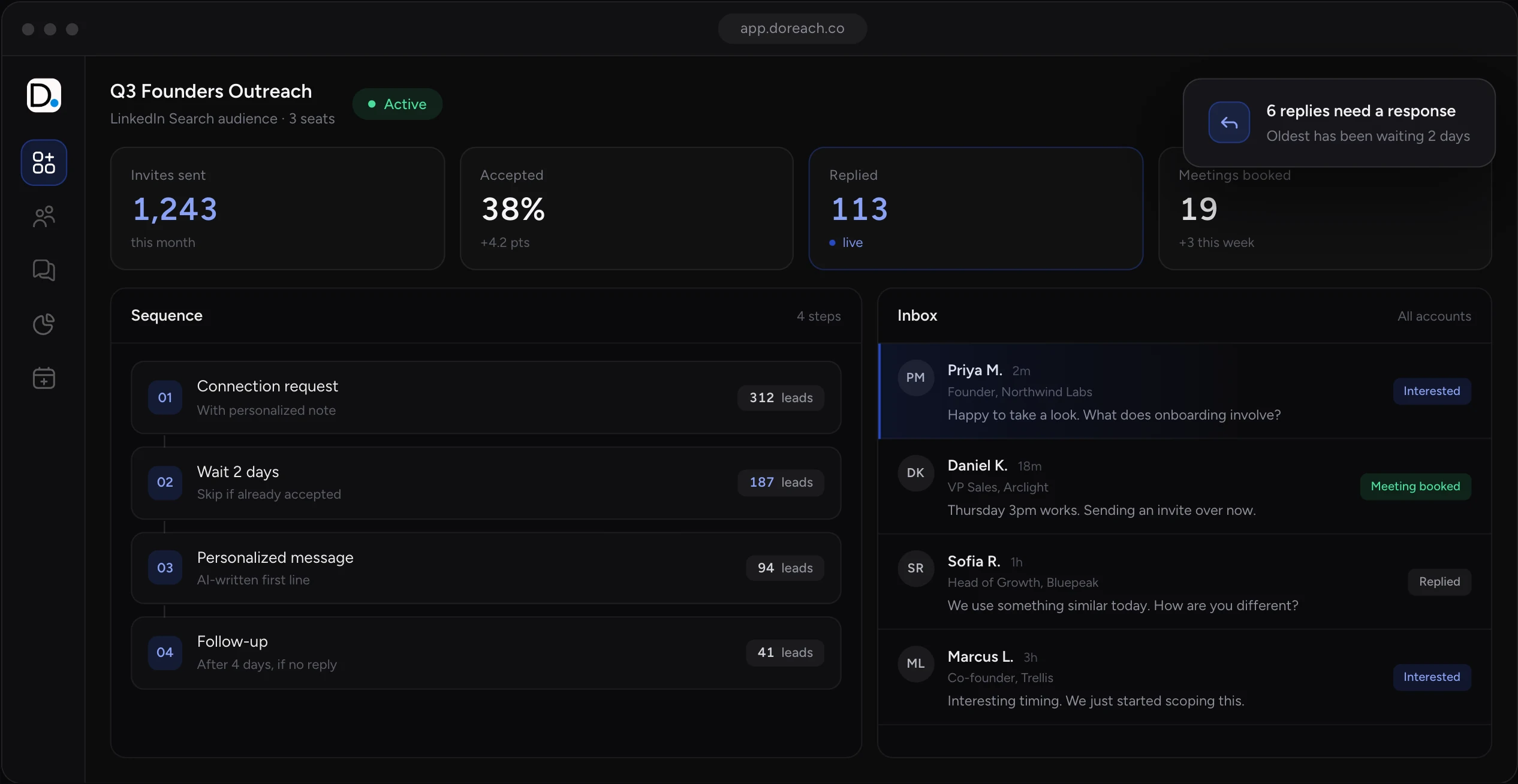
Doreach defaults to 80 connection requests per connected account per week, which works out around fifteen a working day, with a randomised gap between actions and a sending window in your team’s timezone. Details in limits and pacing.
Those defaults sit deliberately below what LinkedIn tolerates. If you need more volume, the safe answer is another connected account, not a higher limit on one profile.
Measure the right thing first
Acceptance rate tells you whether the list is right. Under 20%, stop and rebuild the audience. This number governs both your results and your account’s risk, which is why it comes first.
Reply rate tells you whether the writing works.
Positive reply rate tells you whether the offer does.
Most teams read these in reverse and end up rewriting messages to fix a targeting problem.
What to do next
Take your current prospect list and try to finish the sentence at the top of this page in one line. If you cannot, rebuild the list from a warmer source before you write anything.
Then check acceptance rate after the first hundred requests, not the first thousand.