“They just raised a Series B” is not a reason to contact someone. It is a reason everybody contacts them, in the same week, saying roughly the same thing.
A signal is only worth tracking if it changes what you say. That is the test worth applying before adding anything to a list.
Signals that change the message
| Signal | What it lets you say |
|---|---|
| Commented on a post about your problem area | You already told me you think about this |
| Registered for a relevant event | You are actively learning about this topic |
| Recently changed roles | You are deciding what to keep and what to replace |
| Hiring for a role that implies your problem | You are scaling something that will break |
| Posted about a specific frustration | Here is how others handled that |
Signals that mostly do not
Funding. Public, tracked by everyone, and it says nothing about your specific problem. Useful as a filter, useless as an opener.
Technology detected on their site. Tells you what they bought, not whether they are unhappy with it.
Company growth percentages. Nobody has ever replied because you noticed their headcount grew 12%.
The pattern: signals derived from databases are widely shared, so they buy you nothing. Signals derived from what a person visibly chose to do are specific to them.
The visible-action advantage
Someone commenting on a post about outbound hiring has self-selected into your topic in public, this week.
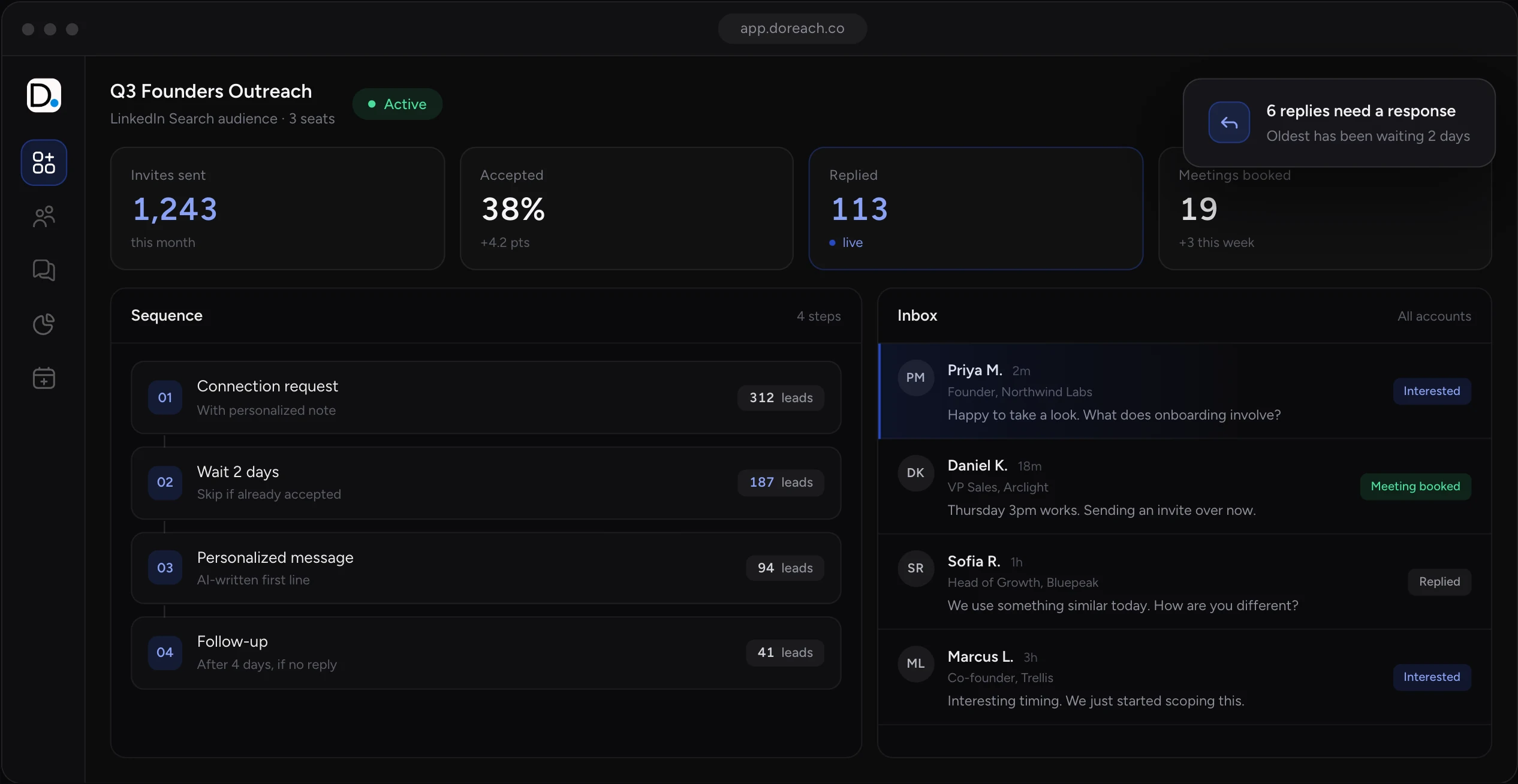
That beats any inferred signal, and it is available without buying anything. Doreach pulls audiences directly from LinkedIn post engagers, group members and Instagram followers for exactly this reason. The signal and the list are the same object, so nothing gets lost between the research and the sending.
Use the signal once, briefly
The common failure is reciting it back. “I saw you commented on Marcus’s post about SDR ramp time, and also that you joined in March, and that your team grew…” reads as surveillance.
One clause. “Saw your comment on Marcus’s SDR post.” Then get to the point.
Freshness beats precision
A perfect signal from three months ago is worse than a rough one from Tuesday.
Whatever you track, weight it by recency, and re-pull audiences rather than working from a list you built last quarter. Titles change, people leave, and a message referencing a role someone no longer holds does more damage than no message at all.
What to do next
List the signals your current campaign uses and cross out any that do not change a sentence in the message. If the list empties, your targeting is running on filters rather than reasons, and the fix is a warmer audience source.